
Arrest Records Fairfax VA give residents a fast, online path to locate an arrest history, arrest information, or a full arrest report without stepping into a sheriff’s office. By entering a name, date, location, or arresting agency, users can instantly pull an arrest record lookup from the county’s public arrest database, revealing details such as arrest number, case number, charges, and booking status. This search by name or search by date feature meets the common need to check if someone has been arrested, verify a recent arrest, or review historical arrest records for legal or personal reasons. The platform also supports arrest records search by county, city, or specific law enforcement agency, ensuring that each query returns precise arrest record search results tailored to the user’s intent. Whether you’re a landlord screening tenants, an employer verifying background information, or a family member seeking peace of mind, the online portal streamlines the arrest record search process with clear results and reliable data.
Arrest Records Fairfax VA also simplify the steps needed to obtain a certified copy of an arrest record or to request an arrest report for court use. By following a straightforward arrest record lookup by case or report number, users can access arrest charges, offense classification, and any updates such as pending or dismissed charges. The system answers frequent questions like “how to find an arrest record by name,” “how to search arrest records online,” and “are arrest records public,” while clarifying the difference between an arrest and a conviction. With built‑in filters for arrest date range, arrest location, and arresting agency, the service eliminates common search problems such as incorrect names or missing case numbers, delivering accurate, up‑to‑date arrest history that respects privacy rules and expungement restrictions.
How to Search Arrest Records
You can search arrest records in Fairfax County through a public arrest database maintained by the Fairfax County Sheriff’s Office. The system supports arrest record lookup by name, arrest date, arresting agency, case number, or report number. You can also access arrest lookup to review official records. After you enter your search criteria, the portal shows matching arrest history records with details such as arrest number, charges, and booking status. You do not need an account to run a basic search, but you must submit a formal request to obtain a certified copy of an arrest record.
Official Search Portal https://fairfaxcounty.gov/sheriff/records-request
Steps to Search
- Open the Fairfax County Sheriff’s Office records request page in your browser.
- Pick a search method such as name, date, location, or case number.
- Type the person’s full legal name, the date of arrest, or the case or report number in the search field.
- Review the matching arrest records shown on the results page.
- Click a record to view arrest charges, offense classification, and booking details.
- Submit a records request form if you need a printed or certified copy of the arrest report.
Arrest Record Information
An arrest record in Fairfax County shows a summary of the event in which law enforcement took a person into custody. Each entry is tied to a specific arrest number and links to a case number when charges are filed. The record also shows the status of the case, so you can see if the matter is pending, dismissed, or closed. You can use these data points to verify a recent arrest or to gather facts for a personal or professional background check.
Person’s Name
The person’s name appears exactly as it was recorded at the time of booking. If the individual gave a different name during processing, the record may show alternate spellings or aliases. A search by name returns every arrest tied to that legal name within the Fairfax County system. Name-based searches work best when you use the full legal first and last name.
Arrest Date and Time
The arrest date and time show when law enforcement physically detained the person. This field differs from the booking date, which reflects when the person was processed at the jail. You can use the date and time to confirm a specific incident or to cross-check reports from other sources. The portal displays the date in a month-day-year format for clarity.
Arrest Location
The arrest location shows the street address, intersection, or area where the person was taken into custody. This field helps you confirm that the arrest happened within Fairfax County jurisdiction. Location data also ties the arrest to a specific reporting district or precinct. You can use the address field to filter results by neighborhood or by city.
Arresting Agency
The arresting agency shows the law enforcement body that made the arrest. In Fairfax County, this is often the Fairfax County Sheriff’s Office, the Fairfax County Police Department, or a municipal police department. Each agency maintains its own arrest records and report numbers. Knowing the agency helps you request the right file when you need an official copy.
Arrest Number
The arrest number is a unique identifier assigned to each arrest event. You can use it to look up the full arrest report in the county database. This number stays the same even if the charges change later in the court process. Request this number when you contact the Sheriff’s Office for a copy.
Case Number
The case number links an arrest to a court case once charges are filed. You can use the case number to check the docket at the Fairfax General District Court or the Fairfax Circuit Court. Not every arrest produces a case number, especially if no charges were filed. When a case number exists, it appears next to the arrest number on the record page.
Arrest Status
The arrest status shows the current state of the case. Status fields include active, pending, closed, dismissed, or reduced. A status update reflects the most recent action taken by the court or the prosecutor. You should review this field often, as it can change over time.
Available Arrest Details
The available arrest details present a snapshot of the full report. You can see the offense description, charge classification, arresting officer, and booking facility. The portal also lists the custody status and any release or transfer information. Use these details to build a complete picture of the arrest event.
Arrest Details
Arrest details go beyond basic identifiers and show what happened during the arrest. These fields explain the reason for detention, the charges filed, and the circumstances reported by the officer. Reviewing arrest details helps you understand the context behind the case number. The Sheriff’s Office updates these details as new information comes in from the court.
Reason for Arrest
The reason for arrest describes why law enforcement detained the person. Common reasons include outstanding warrants, probable cause, or observed criminal activity. The portal displays the reason in plain language so you can interpret it without legal training. This field ties directly to the offense description listed in the charges section.
Arrest Charges
The arrest charges list the specific criminal counts the officer cited at the time of arrest. Each charge has its own number and classification, such as misdemeanor or felony. Charges shown on the arrest record may differ from the final charges filed in court. You should check the court docket for the most current list.
Offense Description
The offense description explains the nature of each charge in everyday terms. For example, a charge for “driving under the influence” appears with a description of the alleged behavior. This field helps you grasp the facts without reading the full legal code. The description also shows the statute number when available.
Offense Classification
The offense classification shows whether the charge is a misdemeanor, felony, or infraction. Virginia law assigns these classifications based on the severity of the alleged crime. A felony charge carries heavier penalties than a misdemeanor. The classification appears next to each charge on the arrest record page.
Arrest Circumstances
The arrest circumstances describe how the arrest took place. This field notes whether the arrest was a result of a traffic stop, a warrant service, or a reported incident. The narrative also lists any resisting arrest or use of force details. Officers write this section in the incident report attached to the arrest record.
Arresting Officer or Agency
The arresting officer or agency field lists the name of the officer and the agency that made the arrest. You can use this field to request a copy of the officer’s report. The field also shows the officer’s badge number and division. Agency contact details appear on the Fairfax County government website.
Associated Case Information
The associated case information shows the court case number, the court name, and the next hearing date. You can use this data to track the case through the Virginia court system. The portal updates this section after each court action. Always check the case docket for the latest filings.
Arrest Charges and Offenses
Arrest charges and offenses form the legal core of any arrest record. They show what crime the person is accused of committing at the time of detention. Each charge has a number, a description, and a classification. The system tracks changes to charges as the case moves through court.
Misdemeanor Charges
Misdemeanor charges cover less serious offenses such as petty theft, simple assault, or minor drug possession. In Virginia, misdemeanors are split into Class 1, 2, 3, and 4, with Class 1 carrying the harshest penalty. An arrest record will list the class next to the charge description. You can face up to 12 months in jail and a fine of up to $2,500 for a Class 1 misdemeanor.
Felony Charges
Felony charges cover serious offenses such as burglary, aggravated assault, or drug trafficking. A felony arrest can result in a prison sentence of one year or more. The arrest record shows the felony class, which can range from Class 1 to Class 6 in Virginia. Felony charges also trigger a formal grand jury review.
Multiple Charges
A single arrest can lead to multiple charges when the officer cites more than one offense. Each charge gets its own number and description. The court can dismiss some charges while others proceed to trial. You should review every charge listed on the arrest record.
Charge Numbers
Charge numbers are unique identifiers assigned to each offense within a case. They help the court, defense attorneys, and the public track each count separately. The arrest record lists the charge number next to the offense description. You can reference this number when contacting the Clerk of Court.
Charge Descriptions
Charge descriptions explain the legal basis for each count. They use the language from the Virginia Code and often include the statute number. For example, “Va. Code § 18.2-95” refers to grand larceny. The description helps you understand the exact nature of the charge.
Original and Updated Charges
Original charges appear at the time of arrest. Updated charges reflect any changes made by the prosecutor or the court. The arrest record shows both versions so you can see how the case evolved. Updates often happen after the first court hearing or after a plea deal.
Pending Charges
Pending charges have not yet been resolved by the court. They remain open until the prosecutor files a formal motion or the court enters a final order. The arrest record will show “pending” next to any unresolved count. You can check the court docket for the next action date.
Arrest Records by Date and Location
Arrest records by date and location help you narrow your search to a specific event. You can filter by the exact date, a date range, a city, a street address, or a district. This method works well when you know when or where the arrest happened. The system then shows every arrest tied to that filter.
Search by Arrest Date
Search by arrest date lets you enter a specific day to view all arrests made on that date. This filter helps you confirm a single event reported in the news. The portal returns a list of arrests sorted by time. Each entry shows the name, location, and charge.
Search by Date Range
Search by date range lets you set a start date and an end date. The system then shows every arrest that happened within that window. You can use this filter to track arrest trends in a neighborhood or to verify multiple events. The portal supports date ranges up to one year.
Search by City
Search by city limits the results to arrests within Fairfax County’s cities and towns. Cities include Fairfax City, Falls Church, and Herndon, each with their own police departments. The filter helps you target arrests handled by city police rather than county deputies. You can combine the city filter with a date range for tighter results.
Search by Street Address
Search by street address shows arrests made at or near a specific address. This filter helps property owners check incidents on their land. The system matches the address against the location field in the arrest record. You should enter the full street name and number for the best match.
Search by Arrest Area or District
Search by arrest area or district uses the police beat or sheriff’s district as the filter. Fairfax County divides its jurisdiction into eight police districts. You can pick a district to view arrests in that area. This filter is useful for community watch groups and neighborhood associations.
Historical Arrest Records
Historical arrest records cover events from prior years. The Sheriff’s Office archives older records in a separate database. You can request access to historical records by submitting a records request form. The archive holds arrest reports going back several decades.
Arresting Agency Records
Arresting agency records show which law enforcement body handled the arrest. Each agency keeps its own files and assigns its own report numbers. You need to know the agency to request the correct file. The table below lists the main agencies that operate in Fairfax County.
Sheriff’s Office Arrest Records
Sheriff’s Office arrest records cover arrests made by deputies or processed at the Adult Detention Center. You can request these records through the Sheriff’s records request page. The office assigns an agency report number to each event. You should note the report number when you contact the office.
Police Department Arrest Records
Police Department arrest records cover arrests made by sworn officers of the Fairfax County Police Department. These records include incident reports, witness statements, and officer narratives. You can request a copy through the police department’s records unit. The department charges a small fee for each copy.
County Law Enforcement Records
County law enforcement records cover all arrests made within unincorporated Fairfax County. The county operates a central records system that stores arrest data from the Sheriff’s Office and the Police Department. You can search the system online or visit the records counter in person. The system also tracks warrants and inmate custody.
State Law Enforcement Records
State law enforcement records cover arrests made by the Virginia State Police. These records apply when a state trooper makes an arrest on a highway or across jurisdictional lines. You can request state police records through the Virginia State Police headquarters. State records use a different numbering system than county records.
Multi-Agency Arrest Records
Multi-agency arrest records cover events handled by more than one law enforcement body. Joint operations often involve the Sheriff’s Office, local police, and federal partners. The lead agency files the primary report, and supporting agencies file supplemental reports. You should request the primary report first.
Agency Report Numbers
Agency report numbers are unique identifiers assigned by each law enforcement body. The number appears on every arrest record and helps the agency track the file. You should write down the report number when you request a copy. The number stays the same even if the case moves to a different court.
Arrest Records and Booking Information
Arrest records and booking information work together to show the full custody timeline. You can also access fairfax county va records to review official records. The arrest record shows the moment of detention. The booking record shows the intake process at the jail. Both records are public unless a court orders them sealed.
Arrest vs. Booking
An arrest happens when law enforcement takes a person into custody. A booking happens after the arrest, when the jail processes the person. The booking records fingerprints, photographs, and personal details. An arrest can happen without a booking if the officer issues a summons instead of taking the person to jail.
Booking Number
The booking number is a unique identifier assigned during the intake process. It links the arrest record to the jail’s inmate database. You can use the booking number to check the custody status of an inmate. The booking number appears on the inmate roster page of the Sheriff’s Office.
Booking Date
The booking date shows when the person entered the jail. This date can differ from the arrest date by hours or even days. The booking date helps you track how long a person has been in custody. The portal displays the date in a standard month-day-year format.
Booking Facility
The booking facility shows where the person was processed. In Fairfax County, most bookings happen at the Adult Detention Center on Judicial Drive. Some arrests lead to transport to other regional jails. The facility name appears on the booking record.
Booking Charges
Booking charges list the offenses cited at the time of intake. These charges can differ from the arrest charges if the officer added or dropped counts during processing. The booking charges feed into the court case. You should compare the booking charges with the court docket for accuracy.
Custody Status
The custody status shows whether the person is still in jail, released on bond, or transferred to another facility. The status updates as the case moves through court. You can check the current status on the Sheriff’s inmate search page. The system refreshes every few hours.
Release or Transfer Information
Release or transfer information shows when and how the person left custody. Release types include release on bond, release on personal recognizance, or transfer to state prison. The record also lists the release date and time. You can use this data to confirm that someone is no longer in jail.
Arrest Records and Warrants
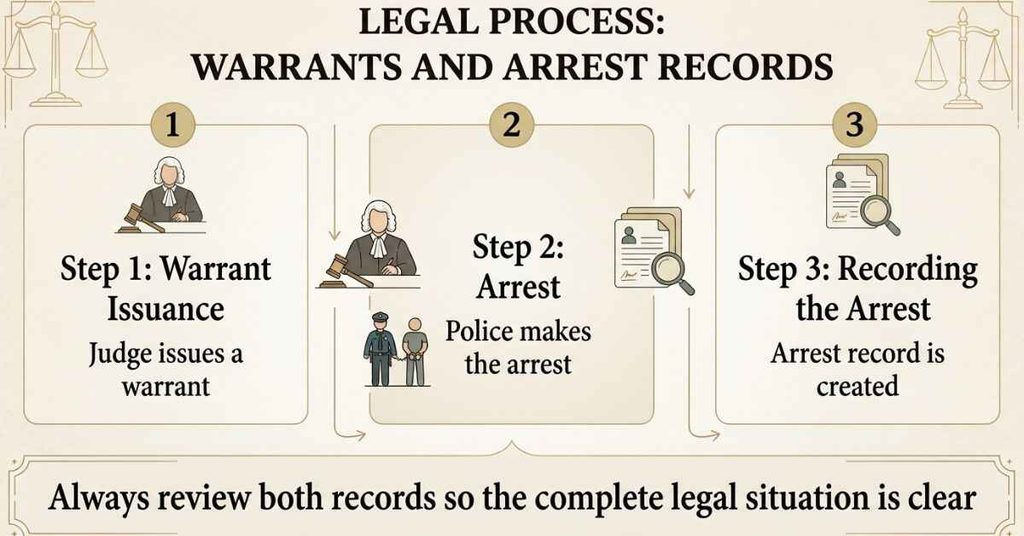
Arrest records and warrants are closely linked. Many arrests happen because a judge issued a warrant for the person’s arrest. The warrant gives law enforcement the legal authority to detain the person. The arrest record will note if a warrant triggered the detention.
Arrests Based on Warrants
Arrests based on warrants happen when a judge signs a legal order for the person’s detention. The warrant lists the charges and the bond amount. The arresting officer serves the warrant and takes the person into custody. The arrest record shows the warrant number and the issuing court.
Warrant-Related Arrest Information
Warrant-related arrest information appears on the arrest record when a warrant triggered the detention. The record shows the warrant type, the issuing court, and the date the warrant was signed. You can use this data to verify the legal basis for the arrest. The warrant file is also public unless sealed.
Active Warrant Status
Active warrant status shows that a warrant remains open and unserved. Law enforcement can arrest the person at any time based on an active warrant. The status changes to “served” once the officer makes the arrest. You can check warrant status through the Sheriff’s Office or the local court.
Bench Warrant Arrests
Bench warrant arrests happen when a judge issues a warrant for failing to appear in court. The warrant can result from a missed court date, a failed drug test, or a violated probation. The arrest record notes the bench warrant and the underlying case. A bench warrant arrest can happen anywhere in the state.
Arrest Without a Warrant
An arrest without a warrant happens when an officer has probable cause to believe a crime occurred. The officer must witness the crime or gather enough evidence to justify the arrest. The arrest record explains the probable cause in the narrative section. Warrantless arrests are common for misdemeanors witnessed by the officer.
Warrant Records vs. Arrest Records
Warrant records and arrest records serve different purposes. A warrant record shows a court order for detention. An arrest record shows the actual detention. A warrant can exist without an arrest, and an arrest can happen without a warrant. You should review both records to get the full picture.
Arrest Records and Court Cases
Arrest records and court cases connect through the case number. The arrest triggers the case, and the court handles the legal outcome. The arrest record shows the start of the process. The court docket shows the end. You can follow a case from arrest to final disposition.
Case Number
The case number is a unique identifier assigned by the court. It links the arrest to the court file. You can use the case number to look up the docket online. The case number stays the same even if the charges change.
Court Case Information
Court case information shows the charges filed, the court hearing dates, and the final outcome. You can find this data on the Virginia Courts case search portal. The portal shows the judge, the prosecutor, and the defense attorney. You can also view the case history and any motions filed.
Filing of Charges
The filing of charges happens after the arrest when the prosecutor files a formal complaint. The complaint lists the charges and the facts of the case. The court then sets the first hearing date. The arrest record updates to show that charges have been filed.
Court Hearings
Court hearings cover every event in the case, from arraignment to trial. Each hearing has its own date and purpose. The court docket lists the type of hearing, the judge, and the outcome. You can attend most hearings as a member of the public.
Case Disposition
Case disposition shows the final outcome of the case. Dispositions include guilty plea, not guilty verdict, dismissal, or nolle prosequi. The disposition appears on the court docket and the arrest record. You can request a copy of the disposition order from the Clerk of Court.
Arrest Record vs. Court Record
An arrest record shows the detention and booking. A court record shows the legal process after the arrest. The two records can show different outcomes. An arrest does not always lead to a conviction. You should review both records for a complete history.
Arrest Does Not Establish Guilt
An arrest does not establish guilt under Virginia or federal law. The court must convict the person to prove guilt. An arrest alone cannot be used to prove criminal liability in a civil case. You should be careful when sharing arrest data, as it can damage a person’s reputation without a conviction.
Arrest Record Status
Arrest record status shows the current state of the arrest file. Status types include active, pending, closed, dismissed, and reduced. The status changes as the case moves through court. You can check the status online or by contacting the Sheriff’s Office.
Active Arrest Records
Active arrest records cover cases still in progress. The court has not entered a final order, and the charges remain open. You can view the record with some redactions to protect the investigation. Active records update as the case moves through court.
Pending Cases
Pending cases cover arrests where the prosecutor has filed charges but the court has not resolved them. The record shows the next hearing date and the current charges. You can check the docket for updates. Pending cases can last several months or even years.
Closed Arrest Records
Closed arrest records cover cases where the court entered a final order. The order can be a conviction, a dismissal, or a nolle prosequi. Closed records are fully public unless sealed. You can request a copy of the final order from the Clerk of Court.
Dismissed Charges
Dismissed charges show that the court or the prosecutor dropped the case. The arrest record notes the dismissal and the reason. Common reasons include lack of evidence, witness unavailability, or plea deals. Dismissed charges still appear on the arrest record unless expunged.
Charges Reduced or Changed
Charges reduced or changed shows that the prosecutor amended the original counts. The court must approve the amendment. The arrest record shows both the original and the updated charges. You can compare the two lists to see how the case evolved.
Case Disposition
Case disposition shows the final outcome of the criminal case. The disposition appears on the arrest record after the court enters the order. Common dispositions include guilty, not guilty, dismissed, or nolle prosequi. You can request a certified copy of the disposition from the Clerk of Court.
Record Updates
Record updates happen as new information becomes available. The Sheriff’s Office updates arrest records after each court hearing. The updates can change the status, the charges, or the disposition. You should check the record often to see the latest data.
Arrest Records and Mugshots
Arrest records and mugshots connect through the booking process. The mugshot is the photograph taken at intake. The arrest record links to the mugshot through the booking number. You can view the mugshot on the Sheriff’s inmate search page or by submitting a public records request.
Booking Photograph Availability
Booking photograph availability depends on the custody status. Current inmates have their mugshots posted on the inmate search page. Released inmates may have their mugshots archived. You can request archived mugshots by submitting a public records request to the Sheriff’s Office.
Arrest Record and Mugshot Differences
An arrest record shows the facts of the detention. A mugshot shows the person’s face at the time of booking. The two records are separate files that link through the booking number. You can view one without the other, but both are public in most cases.
Matching a Mugshot to an Arrest Record
Matching a mugshot to an arrest record uses the booking number as the key. The booking number appears on both the arrest record and the inmate page. You can also match by name and booking date. Always verify the match by checking the date of birth on both records.
Missing Booking Photographs
Missing booking photographs can happen when the system lost the file or when a court ordered the image sealed. You can report a missing mugshot to the Sheriff’s records unit. The office will check the archive and replace the image if found. Missing photos do not affect the arrest record itself.
Photograph Access Restrictions
Photograph access restrictions apply when a court seals the record or when the case involves a juvenile. You can also access recent arrests to review official records. The Sheriff’s Office also restricts photos during active investigations. You cannot view restricted photos without a court order. The office will deny any request that violates these rules.
Arrest Records and Public Access
Arrest records and public access operate under the Virginia Freedom of Information Act (FOIA). The law gives you the right to view and copy arrest records held by government agencies. Some records stay restricted to protect privacy or active investigations. The Sheriff’s Office follows FOIA rules when processing every request.
Public Arrest Information
Public arrest information covers the basic facts of an arrest, including the name, date, location, and charges. You can view this data online or by visiting the records counter. The Sheriff’s Office also releases arrest summaries to the media. Public information does not include Social Security numbers or medical data.
Online Arrest Records
Online arrest records show current and recent arrests through the Sheriff’s Office website. The portal updates daily with new bookings. You can search by name, date, or booking number. The site also shows custody status and release dates.
Records Available by Request
Records available by request include the full arrest report, witness statements, and officer narratives. You must submit a written request to the Sheriff’s records unit. The office charges a fee for copying and research time. You should allow 5 to 10 business days for processing.
Redacted Arrest Information
Redacted arrest information shows the public version of the record with sensitive data removed. Common redactions include Social Security numbers, dates of birth, and home addresses. Redacted records protect victims, witnesses, and innocent family members. You can request an unredacted copy with a court order.
Confidential Information
Confidential information covers data that FOIA exempts from public release. Examples include juvenile records, sealed cases, and active investigation files. The Sheriff’s Office will not release these records without a court order. You should not expect to see confidential data in a standard public search.
Juvenile Arrest Records
Juvenile arrest records are not public in Virginia. The state keeps these files sealed to protect minors. Only the juvenile, the parents, and authorized agencies can view the records. A court can order the release of juvenile records in specific cases, such as violent felonies.
Active Investigation Restrictions
Active investigation restrictions limit public access to records that could harm an ongoing case. The Sheriff’s Office can withhold arrest reports, witness lists, and evidence logs. The restriction ends when the prosecutor closes the case. You can request the records after the restriction lifts.
Obtaining Arrest Records
Obtaining arrest records in Fairfax County happens through three main channels: online, in person, or by mail. Each method has its own form, fee, and processing time. You should pick the method that matches your needs. The Sheriff’s Office processes all requests under FOIA rules.
Online Records Requests
Online records requests go through the Fairfax County Sheriff’s records request page. You fill out the form with your name, contact data, and the record details. The system sends you a confirmation email and a fee invoice. You can pay the fee online and download the record when ready.
In-Person Requests
In-person requests happen at the Sheriff’s records counter on Judicial Drive. You fill out the same form and pay the fee at the window. The staff can process simple requests while you wait. Complex requests may take several business days.
Mail Requests
Mail requests require a written letter that lists the record you need, your contact data, and a check or money order for the fee. You send the letter to the records unit address. The office will mail the record to you when ready. Mail requests take the longest to process.
Required Request Information
Required request information includes the full name of the arrested person, the date of arrest, and the case or report number when available. You should also list your contact data and the purpose of the request. The Sheriff’s Office uses this data to locate the correct file.
Copy Fees
Copy fees cover the cost of reproduction and staff time. The current rate is $0.25 per page for standard copies and $1.00 per page for certified copies. The office also charges a research fee for requests that take more than 15 minutes to process. You should check the current fee schedule before submitting your request.
Processing Times
Processing times depend on the request type and the workload at the records unit. Simple requests take 3 to 5 business days. Complex requests take 7 to 10 business days. Mail requests can take up to 15 business days. The office will contact you if the request takes longer than expected.
Certified Copies
Certified copies carry the official seal of the Sheriff’s Office and serve as legal proof of the arrest. You can use certified copies for court filings, immigration cases, and background checks. The office charges a higher fee for certified copies. You should request certified copies only when the law requires them.
Arrest Record Accuracy and Limitations
Arrest record accuracy and limitations matter for every user. The records come from official sources, but they can contain errors or delays. You should review each record carefully and report any mistakes to the Sheriff’s Office. The office has a process for correcting errors and updating outdated data.
Official Record Sources
Official record sources include the Sheriff’s Office, the Police Department, and the Clerk of Court. These agencies maintain the master files for every arrest in Fairfax County. Third-party websites often copy data from these sources, but they may not update as quickly. You should always check the official portal first.
Recently Updated Arrest Information
Recently updated arrest information shows the latest changes to the record. The Sheriff’s Office updates the system daily with new bookings and court actions. You can see the last update date on the record page. Recent updates can change the status, the charges, or the custody status.
Delayed Record Updates
Delayed record updates happen when the court has not yet sent the final order to the Sheriff’s Office. The delay can last several days or weeks. During this time, the record may show outdated data. You can check the court docket for the most current information.
Incorrect Arrest Information
Incorrect arrest information can include wrong names, bad dates, or wrong charges. These errors usually happen during the booking process. You can report an error to the Sheriff’s records unit with proof of the correct data. The office will investigate and correct the record when justified.
Duplicate Records
Duplicate records appear when the system logs the same arrest twice. This can happen when two agencies report the same event. The records unit will merge duplicates after review. You should report any duplicates you find to the Sheriff’s Office.
Sealed or Expunged Records
Sealed or expunged records disappear from public view after a court order. A sealed record still exists but stays hidden from the public. An expunged record is destroyed by court order. You cannot view either type of record without a separate court order. The Sheriff’s Office will deny any request for these files.
Limitations of Arrest Records
Limitations of arrest records include the fact that an arrest is not a conviction. The record also may not show the final outcome of the case. You should pair the arrest record with the court docket for a full picture. The record also does not show criminal history outside of Fairfax County.
Search Problems
Arrest records search problems can stop you from finding the right file. Common issues include wrong names, missing case numbers, and restricted records. You can solve most problems by adjusting your search filters or contacting the records unit. The Sheriff’s Office also keeps a help desk for search support.
Arrest Record Not Found
An arrest record not found error means the system has no file that matches your search. This can happen when the arrest happened in a different county or when the record is sealed. You should try a different search method, such as date range or agency. You can also contact the records unit for help.
Incorrect Name or Spelling
An incorrect name or spelling will return no results because the system uses exact matches. You should try alternate spellings, middle names, or aliases. The booking officer may have recorded the name differently than the legal version. You can also search by date range to bypass the name issue.
Incorrect Arrest Date
An incorrect arrest date will return no results because the date filter is exact. You should try a date range that covers the week of the suspected arrest. The booking date may differ from the arrest date by a day or more. You should also try the release date as a backup filter.
Missing Case Number
A missing case number happens when the prosecutor has not yet filed charges. The arrest record will not show a case number until the court creates one. You should check back after the first court hearing. You can also search by name and date range to find the arrest.
Record Not Yet Available
A record not yet available error means the booking is still in process. The system takes a few hours to post new bookings. You should wait and try again. The records unit can also run a manual search for you if the booking is recent.
Restricted Record
A restricted record is hidden from public view by a court order or an active investigation. You cannot view the record without a court order. The Sheriff’s Office will deny any request for the file. You can check the court docket for a public summary of the case.
Archived Arrest Record
An archived arrest record is stored in a separate database that the online portal does not search. You must submit a written request to view archived files. The archive covers arrests from prior years. The records unit will pull the file and send you a copy for a fee.
Contact Details
You can reach the Fairfax County Sheriff’s Office Records Unit at the address and phone numbers below. The office processes records requests, certified copies, and sealed record inquiries during business hours.
- Address: 10520 Judicial Drive, Fairfax, VA 22030
- Phone: (703) 246-2100
- Phone: (703) 246-3227
- Office Hours: Mon-Fri: 8:00 AM – 4:00 PM
Frequently Asked Questions
This list answers common questions about searching and obtaining arrest records in Fairfax County.
How can I search Fairfax arrest records online?
Visit the Fairfax County Sheriff’s public records portal at https://fairfaxcounty.gov/sheriff/records-request. The site lets you enter a name, arrest date, case number, or arresting agency. After submitting the criteria, matching entries appear with details such as arrest number, charges, and booking status. No account is required for a basic search, but you must follow the site’s instructions to view full results.
What info is shown in an arrest record lookup?
An arrest record displays the arrest number, date and time, location, and the agency that made the arrest. It also lists each charge, the classification of the offense, and the current status of the case. Booking details may include the facility where the person was held and any release information. The record often links to related court case numbers.
Can I request a copy of an arrest record?
Yes. After locating the record online, you can submit a request for a certified copy through the same portal or by contacting the Fairfax County Sheriff’s Office at (703) 246‑2100. The request form asks for the record’s identifying number and a brief reason for the copy. Processing may take several business days, and a small fee may apply for certified copies.
Are Fairfax arrest records public documents?
Arrest records in Fairfax County are considered public unless a court order seals or expunges them. The public can view basic details online without a fee. Certain sensitive information, such as juvenile records or sealed cases, is not displayed. If a record is restricted, the portal will indicate that it cannot be accessed publicly.
How do I find an arrest record by case number?
Enter the case number in the search field on the Fairfax County Sheriff’s records portal. The system matches the number to any associated arrest entries and shows the full arrest record, including charges and booking details. If the case number is incorrect or not yet entered into the system, the search will return no results, and you may need to verify the number with the court clerk.